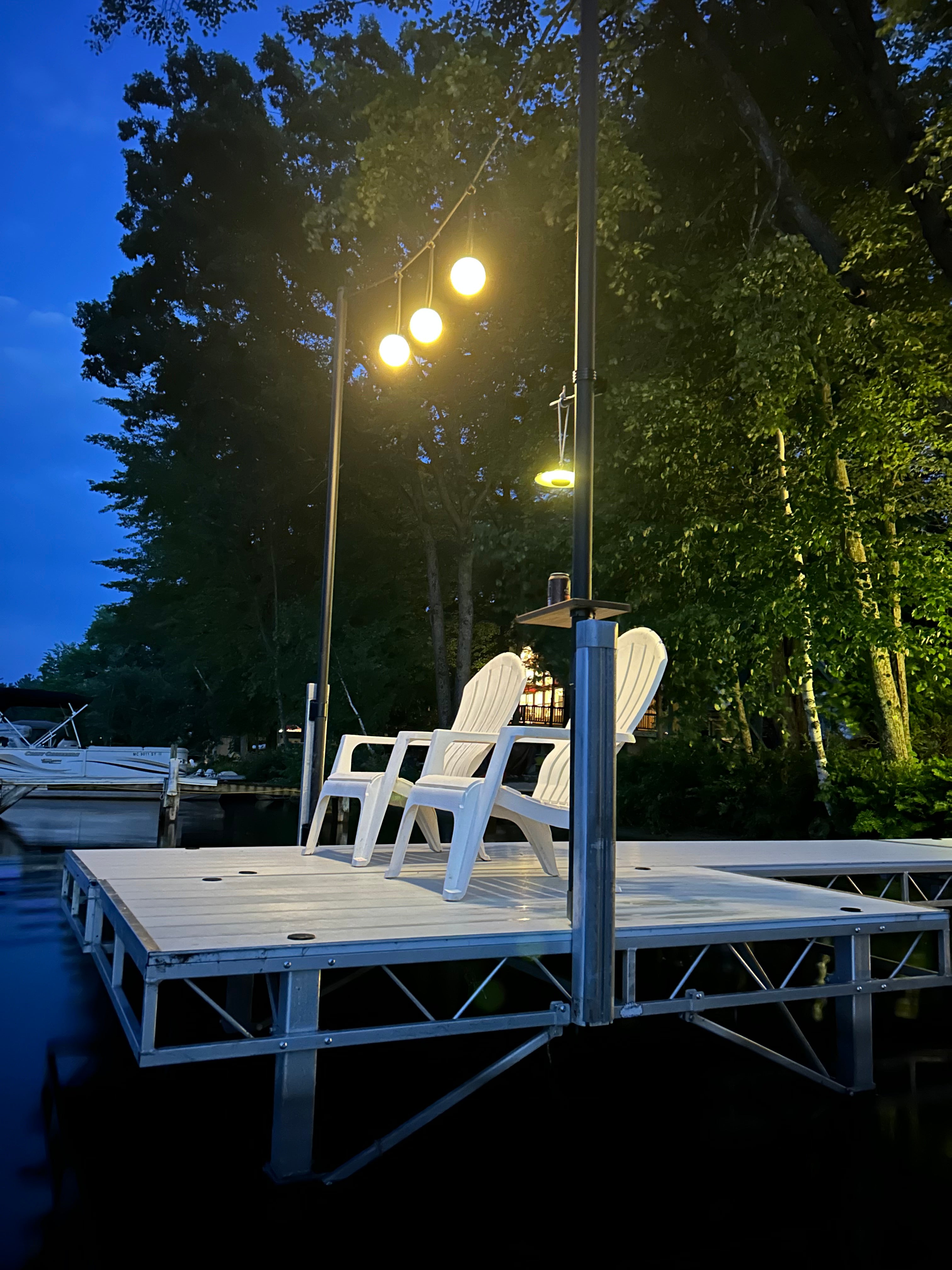
The Tension Behind Pillar Pro™
String lights generate sideways force. Pillar Pro transfers lateral force — not just weight — into your deck structure.
The Tension Behind Pillar Pro™
String lights generate sideways force. Pillar Pro transfers lateral force — not just weight — into your deck structure.

The Catenary Curve
The relationship between span, sag, and tension follows the same curve that defines suspension bridges and power lines—the catenary. It is the natural shape a cable takes under its own weight, balancing gravity and force.
Tension doesn’t remove sag—it controls it, keeping the line stable, predictable, and clear of the ground.
THE FORMULA FOR TENSION
T = horizontal tension in the line (lb)
w = total weight per unit length of the lights (lb/ft)
L = horizontal span between supports (ft)
δ = mid-span sag (ft)
Exclusive to Pillar Pro™, our patented compression anchors don’t just secure your lights — they tension them.
Each anchor functions like a miniature vise. Turning the screw increases compression, gripping the light cord securely and locking in tension without exposed turnbuckles or bulky hardware.
Each box includes four compression anchors — two integrated into the tops of the poles and two for surface mounting. Every anchor accommodates up to two strands of bistro lights.

Six inches of sag on a 20-foot span of string lights creates nearly 30 pounds of lateral froce.
At nine feet high, leverage magnifies that load, demanding a pole with thick walls, a large diameter, and internal ribbing to transfer tension into your deck safely.
Pillar Pro™ is built to handle it.

The same large-diameter structure that resists lateral tension also provides internal space for concealed wiring.
Pillar Pro™ integrates a dedicated power channel within the post, routing cables cleanly from deck to fixture.
No exposed cords. No surface clips.
Just a finished, architectural installation.

Pickup currently not available